FOR SOLAR ECLIPSES
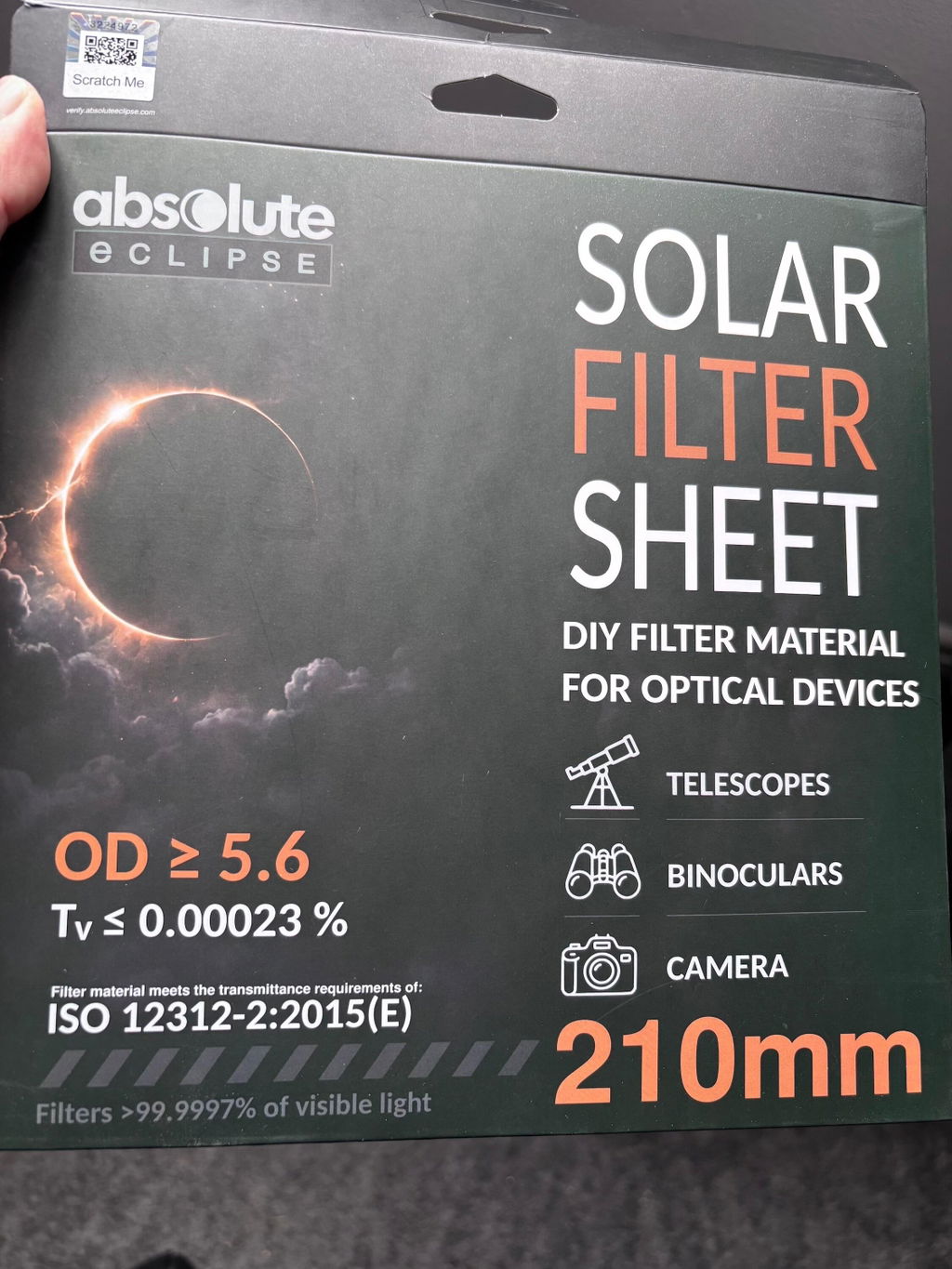
Folha de filtro solar para telescópios, binóculos e lentes de câmaras — Filme solar DIY, OD 5.6
READY FOR 2026, 12th AugustEN ISO 12312-2 certified solar viewer — safe for direct viewing of the 12 August 2026 total eclipse.
Incl. VAT. Free EU shipping over €50.
- AAS-recognized
- CE Category II
- EN ISO 12312-2
- QR-verified
Ships in 24 h from inside the EU on tracked delivery.
30-day returns on unopened items — no questions asked.
Demand peaks close to the date — order early.
It’s today — view safely.amazon · prefer Prime?
The same EN ISO 12312-2 certified glasses are listed on Amazon Germany — useful if you'd rather use Prime delivery or existing credit. Buying direct here is usually cheaper and ships from the EU.
CUT-TO-SIZE SOLAR FILTER FILM - OD 5.6
One Film. All Your Optics. The Sun, Safely.
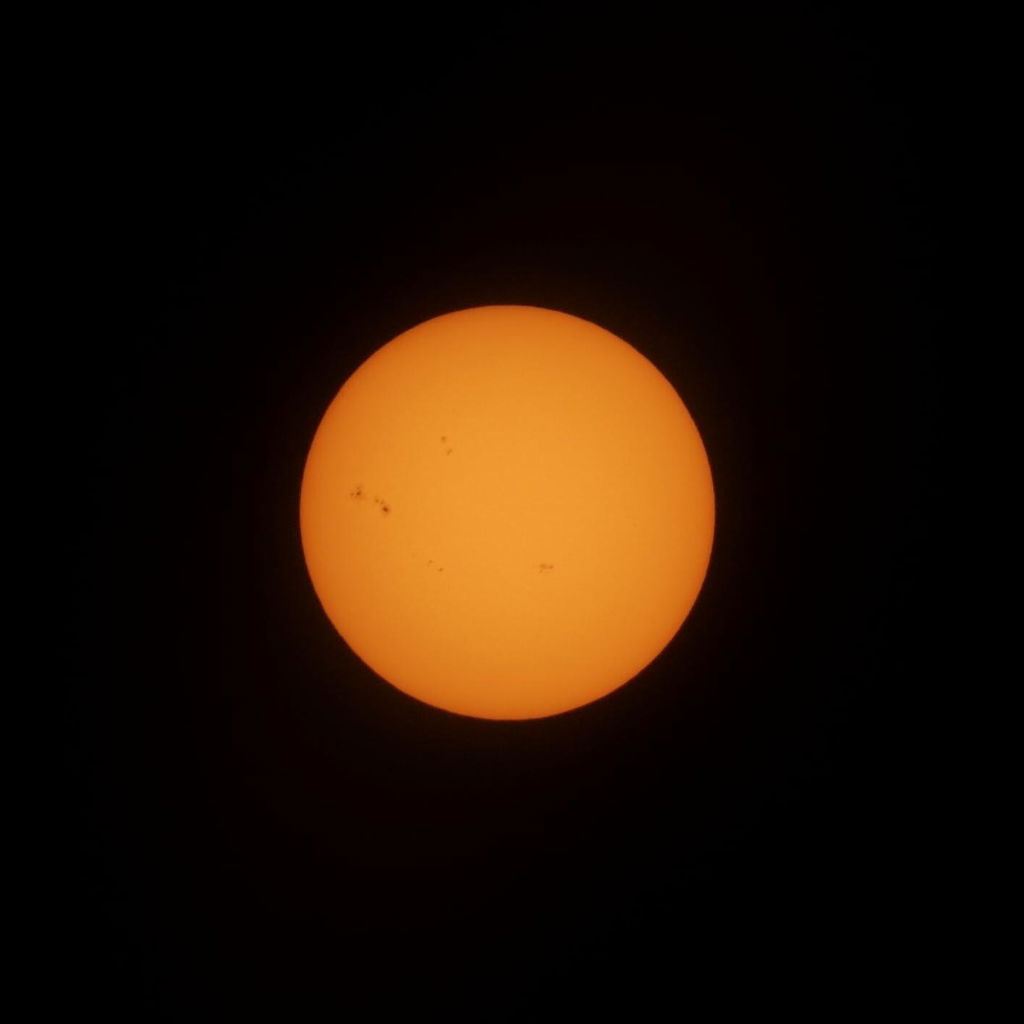
Cut the film to fit your optics: telescope, binoculars, spotting scope or camera lens. Tested to ISO 12312-2 by an accredited laboratory, it blocks 99.9998% of sunlight and reveals a sharp, detailed orange solar disc. Get ready for the eclipse on 12 August 2026.
Create Filters for All Your Optics
Camera Lenses
Build a front-mounted filter for solar photography with your compatible lenses. Attach it securely in front of the front element.
Spotting Scopes
Mount the film over the front aperture of your spotting scope for safe terrestrial-style solar observing.
Telescopes
Make a custom front filter for telescopes and large apertures. Always in front of the tube - never at the eyepiece.
Binoculars
Cut two front filters, one for each objective lens, mounted on separate cells.
The Right Filter for Every Aperture
Measure, Cut, Mount, Check
1. Measure Your Aperture
Note the outer diameter of the tube or lens and cut a cardboard ring slightly larger than the front of your instrument.
2. Cut to Size
Lay the film flat and cut a disc with a 10 mm margin on each side. Handle it by the edges without creasing the surface.
3. Mount It Securely
Place the disc on the cardboard ring and fix it with tape - flat and firmly held, with no risk of slipping off.
4. Check Before Every Use
Inspect the film against a bright light: no pinholes, scratches or tears. Cover the finderscope and replace if damaged.
About this model
A Folha de Filtro Solar Absolute Eclipse é um filme solar flexível para observação e fotografia seguras e diretas do Sol através de instrumentos ópticos. Corte a folha no tamanho desejado e monte-a sobre a abertura frontal de um telescópio, par de binóculos, luneta ou lente de câmera para ver manchas solares, trânsitos planetários e eclipses solares — ou para construir o seu próprio filtro solar personalizado a uma fração do custo de um pronto.
O filme é um polímero aluminizado que transmite no máximo 0,00023% da luz visível — uma densidade óptica de pelo menos OD 5.6 — reduzindo a radiação ultravioleta, visível e infravermelha do Sol a níveis confortáveis de visualização e apresentando um disco solar laranja nítido e natural com detalhes claros das manchas solares. O material do filtro é testado de forma independente pelos Laboratórios ICS (um laboratório de testes acreditado pela ISO/IEC 17025).
Disponível em três tamanhos quadrados — 100×100 mm, 150×150 mm e 210×210 mm — para se adequar a qualquer coisa, desde uma lente de câmera até um grande refrator ou binóculos. Meça a abertura do seu instrumento, corte a folha deixando pelo menos 10 mm de sobreposição em cada lado e fixe-a sobre a abertura frontal com uma estrutura rígida, suporte ou fita adesiva. Posicione o lado refletivo prateado em direção ao Sol e o lado preto em direção ao instrumento.
⚠ Segurança
Este filtro deve ser sempre o primeiro elemento óptico entre o Sol e o seu instrumento. Nunca o coloque atrás da ocular ou de uma lente, onde a luz solar concentrada queimará e causará danos instantâneos e permanentes. Inspecione o filme antes de cada uso e não o utilize se estiver riscado, perfurado ou dobrado. Supervise as crianças em todos os momentos.
Como usá-lo
- Melhor filtro solar para uma câmera — como escolher e por que um filtro ND não é um filtro solar
- Como fotografar o Sol & um eclipse solar — o guia completo para iniciantes
- Configurações da câmera (ISO, abertura, obturador) — o guia rápido de exposição
Fabricante: SIA Gravitis Enterprise Limited, Lauku iela 7-4, Cēsis, LV-4101, Letónia.
Specifications
Specifications
- Certification
- Material tested by ICS Laboratories (ISO/IEC 17025)
- Optical density
- OD 5.6 — transmits ≤ 0.00023% visible light
- Blocks
- Ultraviolet, visible & infrared radiation
- Material
- Aluminised polymer film
- Sizes
- 100×100 mm · 150×150 mm · 210×210 mm
- Use
- Telescopes, binoculars, spotting scopes & camera lenses
- Mounting
- Silver side towards the Sun, black side to the instrument
How to view safely
Certified — but only if you use them right
-
01
Measure your aperture
Measure the front aperture of your telescope, binoculars or lens before cutting.
-
02
Cut & mount over the front
Trim the sheet leaving at least 10 mm overlap on every side, and secure it over the FRONT aperture — never behind the eyepiece or lens.
-
03
Inspect, then observe
Check the film for pinholes, scratches or creases. Position the silver side towards the Sun and observe. Supervise children at all times.
Do
- Mount the filter over the FRONT aperture, before any lens
- Leave at least 10 mm overlap and secure it firmly
- Face the silver reflective side towards the Sun
- Inspect the film for damage before every use
Don't
- Place the filter behind the eyepiece or a lens — it will burn through instantly
- Use the film if scratched, pinholed or creased
- Leave gaps where direct sunlight can bypass the filter
- Leave children unsupervised during observation
Plan your viewing
Be in the right place on 12 August 2026
Bulk & wholesale
Buying for a school, event or resale?
Per-unit price keeps dropping with volume. Order in bulk here, or talk to us for pallet pricing, custom branding and invoicing.