FOR SOLAR ECLIPSES
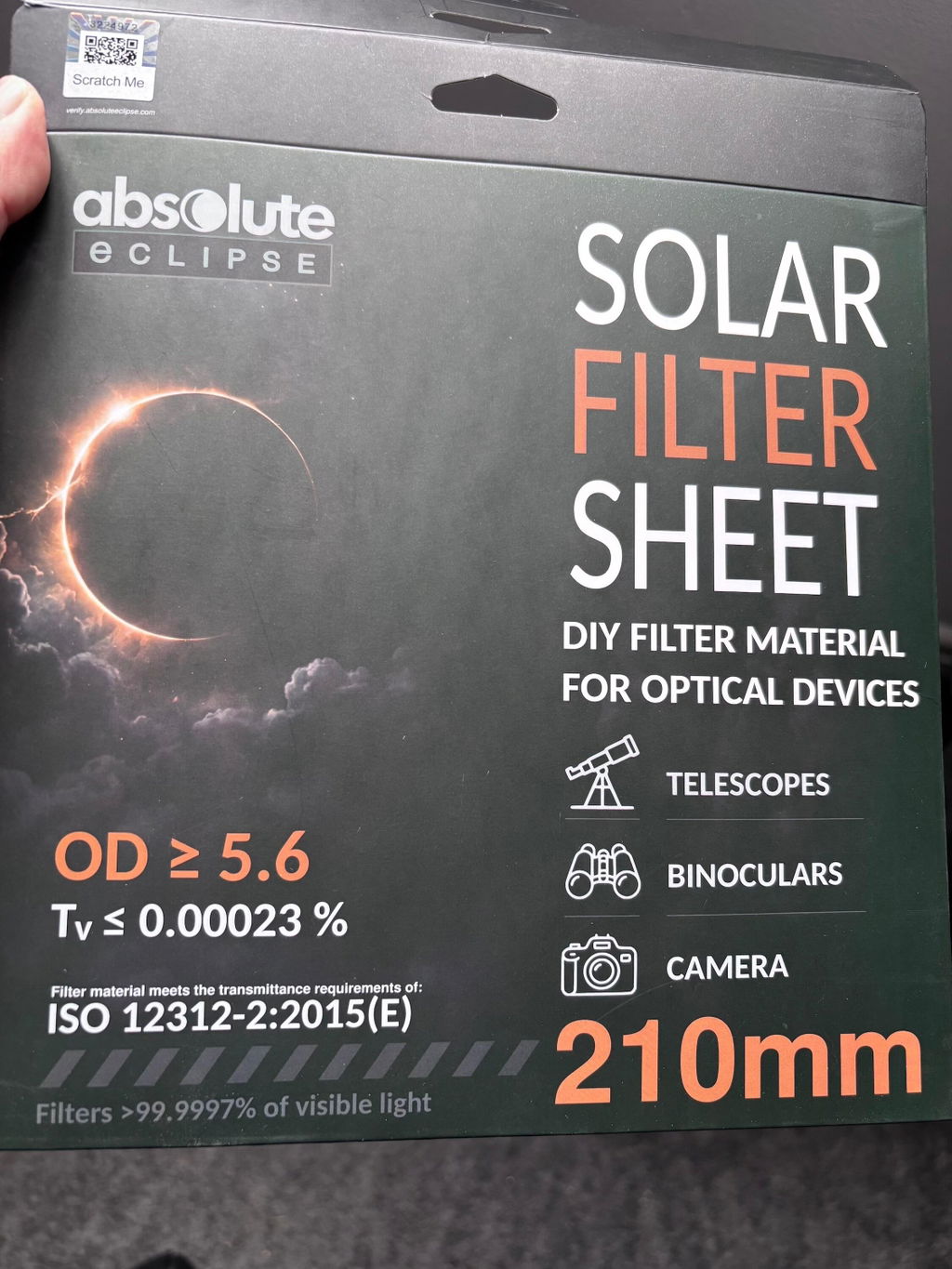
Foglio Filtro Solare per Telescopi, Binocoli e Obiettivi Fotografici — Pellicola Solare Fai-da-te, OD 5.6
READY FOR 2026, 12th AugustEN ISO 12312-2 certified solar viewer — safe for direct viewing of the 12 August 2026 total eclipse.
Incl. VAT. Free EU shipping over €50.
- AAS-recognized
- CE Category II
- EN ISO 12312-2
- QR-verified
Ships in 24 h from inside the EU on tracked delivery.
30-day returns on unopened items — no questions asked.
Demand peaks close to the date — order early.
It’s today — view safely.amazon · prefer Prime?
The same EN ISO 12312-2 certified glasses are listed on Amazon Germany — useful if you'd rather use Prime delivery or existing credit. Buying direct here is usually cheaper and ships from the EU.
CUT-TO-SIZE SOLAR FILTER FILM - OD 5.6
One Film. All Your Optics. The Sun, Safely.
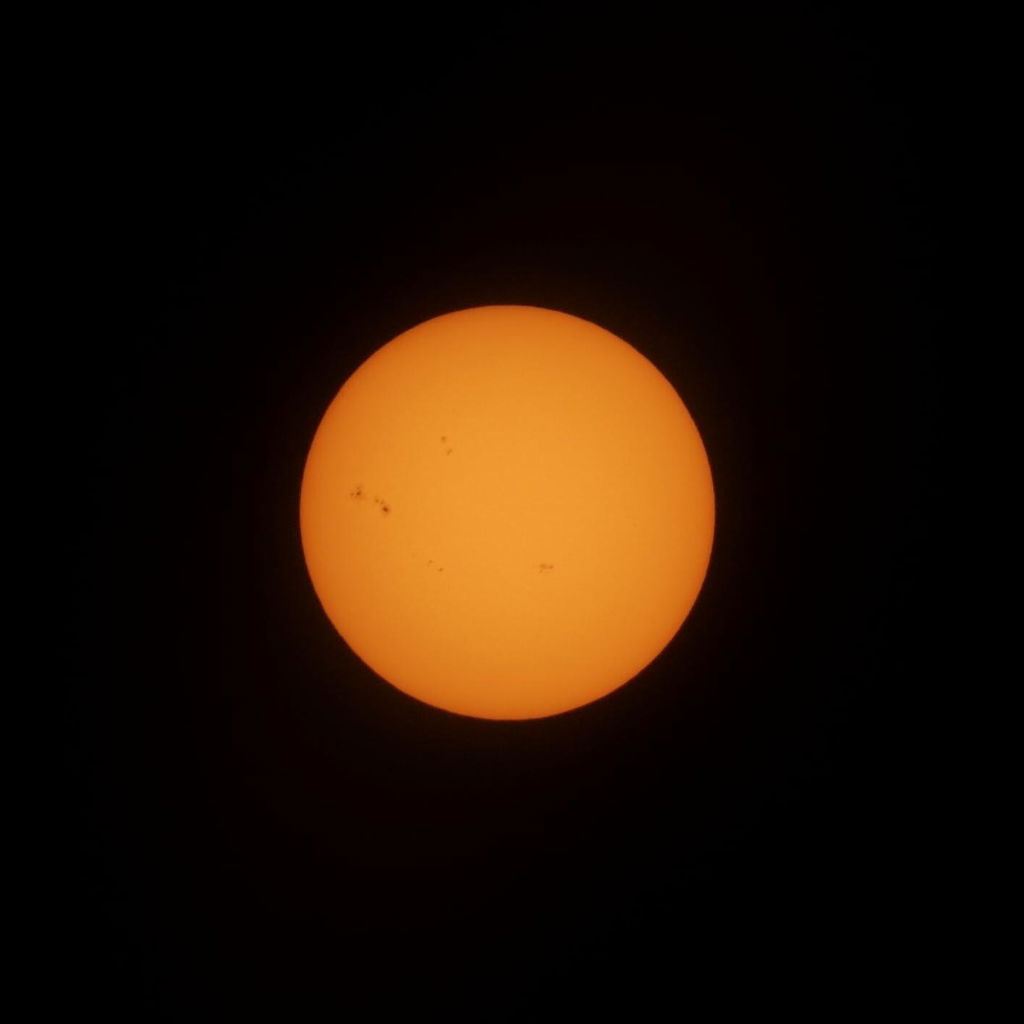
Cut the film to fit your optics: telescope, binoculars, spotting scope or camera lens. Tested to ISO 12312-2 by an accredited laboratory, it blocks 99.9998% of sunlight and reveals a sharp, detailed orange solar disc. Get ready for the eclipse on 12 August 2026.
Create Filters for All Your Optics
Camera Lenses
Build a front-mounted filter for solar photography with your compatible lenses. Attach it securely in front of the front element.
Spotting Scopes
Mount the film over the front aperture of your spotting scope for safe terrestrial-style solar observing.
Telescopes
Make a custom front filter for telescopes and large apertures. Always in front of the tube - never at the eyepiece.
Binoculars
Cut two front filters, one for each objective lens, mounted on separate cells.
The Right Filter for Every Aperture
Measure, Cut, Mount, Check
1. Measure Your Aperture
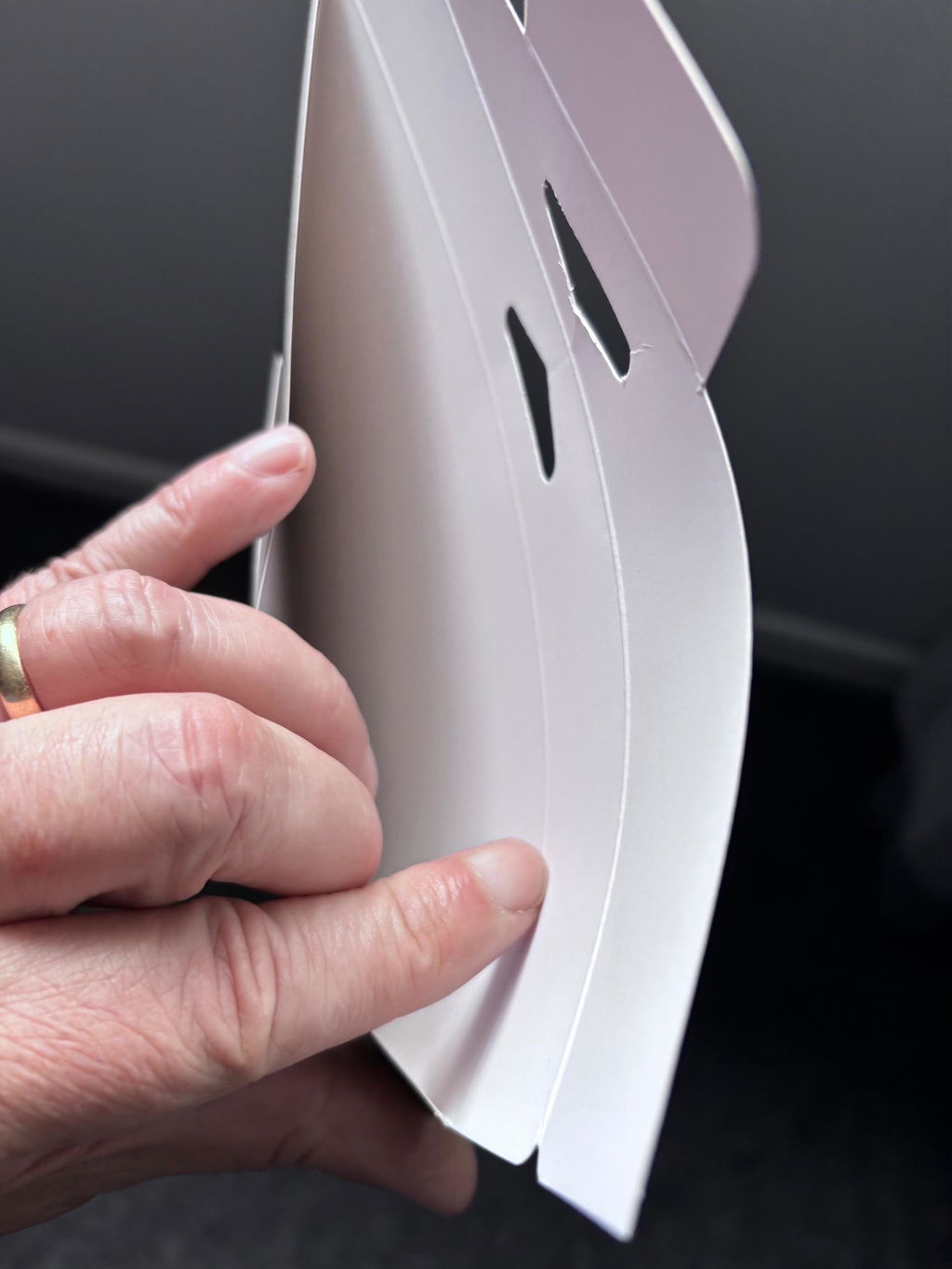
Note the outer diameter of the tube or lens and cut a cardboard ring slightly larger than the front of your instrument.
2. Cut to Size
Lay the film flat and cut a disc with a 10 mm margin on each side. Handle it by the edges without creasing the surface.
3. Mount It Securely
Place the disc on the cardboard ring and fix it with tape - flat and firmly held, with no risk of slipping off.
4. Check Before Every Use
Inspect the film against a bright light: no pinholes, scratches or tears. Cover the finderscope and replace if damaged.
About this model
Il Foglio Filtro Solare Absolute Eclipse è una pellicola solare flessibile per l'osservazione diretta e sicura del Sole e per la fotografia attraverso strumenti ottici. Taglia il foglio su misura e montalo sull'apertura frontale di un telescopio, un paio di binocoli, un cannocchiale o un obiettivo fotografico per osservare macchie solari, transiti planetari ed eclissi solari — o per costruire il tuo filtro solare personalizzato a una frazione del costo di uno già pronto.
La pellicola è un polimero alluminizzato che trasmette non più di 0,00023% di luce visibile — una densità ottica di almeno OD 5.6 — riducendo la radiazione ultravioletta, visibile e infrarossa del Sole a livelli di visione confortevoli e rendendo un disco solare arancione nitido e naturale con dettagli chiari delle macchie solari. Il materiale del filtro è testato indipendentemente da ICS Laboratories (un laboratorio di prova accreditato ISO/IEC 17025).
Disponibile in tre dimensioni quadrate — 100×100 mm, 150×150 mm e 210×210 mm — per adattarsi a qualsiasi cosa, da un obiettivo fotografico a un grande rifrattore o binocolo. Misura l'apertura del tuo strumento, ritaglia il foglio lasciando almeno 10 mm di sovrapposizione su ogni lato, e fissalo sull'apertura frontale con una cornice rigida, un supporto o del nastro adesivo. Posiziona il lato riflettente argentato verso il Sole e il lato nero verso lo strumento.
⚠ Sicurezza
Questo filtro deve sempre essere il primo elemento ottico tra il Sole e il tuo strumento. Non posizionarlo mai dietro l'oculare o una lente, dove la luce solare concentrata brucerà e causerà danni istantanei e permanenti. Ispeziona la pellicola prima di ogni utilizzo e non usarla se graffiata, bucata o piegata. Supervisiona i bambini in ogni momento.
Come usarlo
- Miglior filtro solare per una fotocamera — come scegliere, e perché un filtro ND non è un filtro solare
- Come fotografare il Sole e un'eclissi solare — la guida completa per principianti
- Impostazioni della fotocamera (ISO, apertura, otturatore) — il foglio di trucchi per l'esposizione
Produttore: SIA Gravitis Enterprise Limited, Lauku iela 7-4, Cēsis, LV-4101, Lettonia.
Specifications
Specifications
- Certification
- Material tested by ICS Laboratories (ISO/IEC 17025)
- Optical density
- OD 5.6 — transmits ≤ 0.00023% visible light
- Blocks
- Ultraviolet, visible & infrared radiation
- Material
- Aluminised polymer film
- Sizes
- 100×100 mm · 150×150 mm · 210×210 mm
- Use
- Telescopes, binoculars, spotting scopes & camera lenses
- Mounting
- Silver side towards the Sun, black side to the instrument
How to view safely
Certified — but only if you use them right
-
01
Measure your aperture
Measure the front aperture of your telescope, binoculars or lens before cutting.
-
02
Cut & mount over the front
Trim the sheet leaving at least 10 mm overlap on every side, and secure it over the FRONT aperture — never behind the eyepiece or lens.
-
03
Inspect, then observe
Check the film for pinholes, scratches or creases. Position the silver side towards the Sun and observe. Supervise children at all times.
Do
- Mount the filter over the FRONT aperture, before any lens
- Leave at least 10 mm overlap and secure it firmly
- Face the silver reflective side towards the Sun
- Inspect the film for damage before every use
Don't
- Place the filter behind the eyepiece or a lens — it will burn through instantly
- Use the film if scratched, pinholed or creased
- Leave gaps where direct sunlight can bypass the filter
- Leave children unsupervised during observation
Plan your viewing
Be in the right place on 12 August 2026
Bulk & wholesale
Buying for a school, event or resale?
Per-unit price keeps dropping with volume. Order in bulk here, or talk to us for pallet pricing, custom branding and invoicing.